
Knowing when to leave: the quiet art of walking away
There’s a quiet strength in knowing when to leave. Not just the party, or the job, or the relationship — but any space that no longer reflects who you’ve become. We tend to romanticize endurance, as if staying longer meant caring more. But in truth, there’s a fine line between loyalty and self-betrayal.
Knowing when to leave is not about giving up. It’s about recognizing the moment when growth turns into repetition. When curiosity fades, energy drains, and what once challenged you now just keeps you comfortable. Most people stay because they fear the emptiness that follows departure. But that emptiness is not failure; it’s space — and space is where new life begins.
The illusion of staying
We stay because we believe we still owe something to the past. We stay because leaving feels like breaking a promise. We stay because it’s easier to be unhappy with a reason than uncertain without one. I’ve done it too — held onto jobs that felt safe, relationships that had already ended in silence, projects that no longer inspired me.
But the cost of staying too long is subtle. It doesn’t explode; it erodes. You lose curiosity first, then passion, then self-respect. Before you notice, you’ve adjusted to the smallness of your own comfort. That’s why knowing when to leave is such a rare kind of intelligence. It’s not taught, only learned — through trial, pain, and the slow realization that “enough” is a complete sentence.
When the energy shifts
Every story has a pulse. When something is alive, you feel movement — ideas spark, conversations flow, time disappears. When it’s over, everything feels heavier. You start managing instead of creating. You repeat instead of growing. You think about how it used to feel, instead of how it could feel again.
That’s the first sign: nostalgia replaces excitement.
The second: your body knows before your mind does.
You feel it in your chest, your posture, your voice.
Knowing when to leave is listening to that signal early, before resentment takes root. Because when you stay past your time, you don’t just betray your potential — you begin to resent the very thing that once inspired you. And nothing deserves that ending.
Leaving as an act of respect
Walking away doesn’t always mean closing the door. Sometimes it means changing the way you enter. You can leave a job but stay grateful. You can end a relationship without bitterness. You can walk out of a room without slamming it behind you.
The art of knowing when to leave lies in how you do it — with awareness, not anger. With gratitude for what it gave you, and grace for what it couldn’t. There’s dignity in departure when it comes from clarity, not impulse. And there’s beauty in saying, “This was right for me once, but not anymore.”
In truth, the end is just a different form of love. It’s love redirected — from what was, toward what will be.
The fear behind it
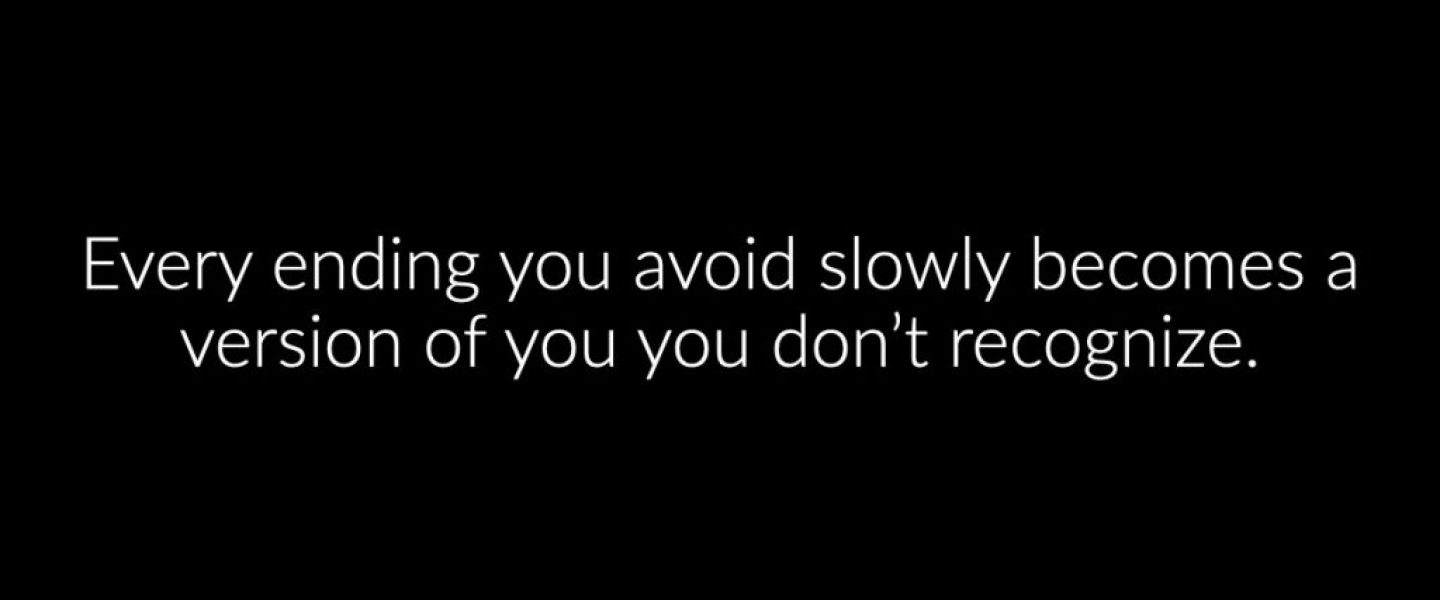
The hardest part isn’t leaving. It’s what happens after. The silence, the doubt, the long nights wondering if you made a mistake. But every ending, if you sit with it long enough, becomes a teacher. You realize that the world doesn’t fall apart when you let go. It expands.
The fear of leaving often hides a deeper truth: we don’t trust ourselves to start again. We think we’ve lost too much time, or that opportunities don’t come twice. But they do — they just wear different faces. Knowing when to leave is really about trusting that you’ll know how to begin again when the time comes.
Every new chapter demands the death of the previous one. You can’t build with both hands if one is still holding on.
A quiet kind of courage
We often celebrate people who fight for what they want. But few celebrate those who quietly walk away when the fight is no longer worth it. Yet that’s where real courage lives — not in persistence alone, but in discernment.
Knowing when to leave is emotional maturity disguised as loss. It’s the ability to say, “I’ve outgrown this,” without needing a villain or a reason. It’s the awareness that endings don’t have to be dramatic to be final.
Sometimes the most powerful move is simply standing up, smiling, and saying, thank you for everything — I’ll go now.
The space that follows
What comes next is uncertainty — and that’s the point. You’re meant to float for a while, to feel directionless, to detox from old identities. Don’t rush to fill the gap. Let it breathe.
In that quiet space, new desires appear. You start noticing what feels light again. You begin to remember who you were before you started clinging. That’s when life begins to rebuild itself — not with plans, but with presence.
Knowing when to leave isn’t about endings. It’s about honoring the rhythm of things — how every beginning eventually asks for closure, and how every closure carries the seed of a beginning.
So the next time you feel the shift — that subtle knowing in your gut — don’t drown it in noise or delay. Listen. Because maybe it’s not loss calling you out the door. Maybe it’s life, asking for a little more room to grow.
Knowing when to leave is so important. The party. The job. The relationship.

