Building cross-departmental collaboration for operational efficiency
Most companies talk about collaboration. Fewer actually build it. Especially when it comes to cross-departmental collaboration, the gap between intention and execution is often wider than anyone admits. Everyone agrees it matters, but few know how to make it work in a way that improves operational efficiency instead of slowing it down.
Let’s be clear. Working across departments isn’t just a communication issue. It’s an operational challenge. When marketing, sales, product, and operations don’t move in sync, inefficiency compounds. Misaligned priorities, duplicated efforts, and unclear handoffs quietly erode performance. And that erosion doesn’t show up in weekly meetings — it shows up in missed targets and operational drag.
Why cross-departmental collaboration breaks down
It’s not a lack of goodwill. Most teams want to collaborate. But friction appears when departments optimize for their own metrics without a shared operational lens. Marketing chases leads, sales chases quotas, product chases releases — and operations has to clean up the mess when the numbers don’t align. Without clear structures, even well-intentioned teams fall into territorial behavior.
Silos are a symptom, not the root cause. The real issue is a lack of shared operational scaffolding — the frameworks that align how different functions make decisions, share context, and measure progress. Cross-departmental collaboration fails when there’s no infrastructure for it. Communication is the first thing that cracks, but behind it is a deeper problem: fragmented accountability.
If your teams don’t co-own outcomes, they will never truly collaborate. That starts with how work is structured and measured. Shared goals without shared metrics are useless. You need visibility into what matters across teams — not just what your department owns. When engineering only tracks velocity and support only tracks tickets closed, nobody sees the full picture. What drives actual efficiency is performance alignment, not just functional excellence.
That’s where performance metrics become strategic glue. When you design metrics that reflect cross-functional outcomes — like activation speed, customer handoff times, or incident response — you force coordination. Each team sees where they contribute to system-wide efficiency. That clarity doesn’t just improve collaboration, it drives sharper execution. If you haven’t already, read our take on using performance metrics to drive operational success.
Collaboration is not culture. It’s structure.
The biggest myth in cross-departmental collaboration is that it’s a cultural issue. It’s not. You don’t fix collaboration by doing more offsites or team-building. You fix it by redesigning how teams operate together — who owns what, how information flows, how conflicts get resolved, and which metrics drive behavior.
A good example: operational handoffs. If marketing passes leads to sales without a shared qualification standard, you get friction. If product launches without coordinating with support, you get chaos. These breakdowns don’t come from bad intentions — they come from bad systems. Tightening those systems is what drives operational efficiency. And collaboration is just the outcome.
The real drivers of effective cross-departmental collaboration
Cross-departmental collaboration doesn’t scale with goodwill. It scales with clarity. And that clarity needs to be operational, not aspirational. To embed collaboration into the fabric of your company, you need three drivers: aligned incentives, shared workflows, and decision transparency.
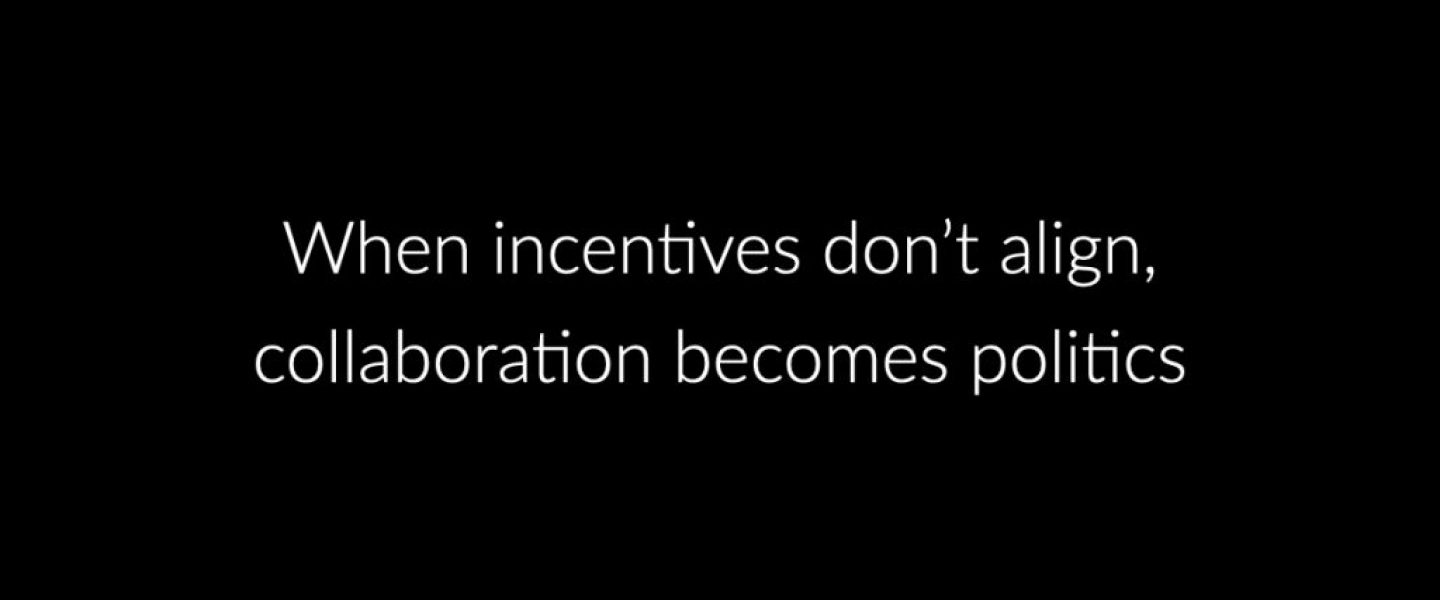
Aligned incentives mean your teams win or lose together. When different departments have conflicting goals, collaboration turns political. But when everyone’s success depends on shared outcomes, you create natural alignment. The key is to design incentives that reward joint execution — not isolated performance. That’s how you replace blame with ownership.
Shared workflows eliminate ambiguity. When teams co-own key processes, you reduce the space for misunderstandings. For example, if sales and customer success jointly manage onboarding, their playbooks must be integrated. Otherwise, clients feel the seams between departments. Process integration — not just alignment meetings — is what makes collaboration operational.
Decision transparency makes coordination scalable. Teams need to know how and why decisions are made across departments. Without that context, they act defensively. But when decisions are documented, explained, and accessible, collaboration improves because teams can anticipate each other. Transparency reduces second-guessing and builds operational trust.
Designing your collaboration systems intentionally
Let’s make one thing clear: you don’t “encourage” cross-departmental collaboration — you design for it. You create it by building systems that force cooperation, not just suggest it. That starts with defining shared rituals: weekly alignment meetings with structured agendas, postmortems that include all relevant functions, and OKRs that span departments.
You also need tools that support that structure. But tools only work if the workflows are real. Don’t implement shared software just to “break silos.” Design your collaboration flows first — who talks to whom, about what, and when — then choose the tools that support those flows. The order matters.
And don’t forget the role of operational reviews. Cross-functional retrospectives are one of the most powerful levers to fix collaboration. They force teams to reflect together, not in isolation. When you debrief as a system, you fix the root causes — not just the symptoms.
What happens when you get it right
When cross-departmental collaboration works, it doesn’t feel like collaboration. It feels like flow. Teams stop fighting for territory and start solving shared problems. Execution speeds up. Meetings shrink. Decisions accelerate. And operational efficiency becomes the default, not the exception.
But it’s not automatic. It takes structure, design, and discipline. If your company’s growth is slowing, or if your teams feel friction that no one can name, don’t look at individuals — look at the system. Misaligned collaboration is rarely about people. It’s about how the work is wired.
Operational excellence depends on how well your departments work together when nobody’s watching. That’s the true test of your systems — and your leadership.