Less than One Project

Manifiesto
There was a time when a website needed very little to say a great deal.
An HTML document, a few lines of text, a handful of images. That was enough to share knowledge, express ideas, tell stories, or connect people. Entire forums hosted extraordinary conversations using just a few kilobytes of data.
Since then, the capabilities of our devices have multiplied. We have faster processors, larger memories, and connections that would have seemed impossible just a few decades ago.
And yet, we still do essentially the same things: read, write, share, learn, communicate.
Why do we need more and more to do the same things?
For years, we have confused capacity with necessity. Because we could use more resources, we started using them. We added layers, dependencies, libraries, animations, and processes that do not always add value. We built increasingly heavy websites to convey messages that could occupy a tiny fraction of that space.
A novel can contain an entire universe, hundreds of characters, and thousands of emotions in less than a megabyte. A blog can offer hundreds of articles and countless hours of reading while taking up less space than a single photograph. An application can solve real problems with just a few lines of thoughtfully written code.
We do not need to return to the past. We do not reject progress, images, interactivity, or the new possibilities of the internet. We believe in using them when they are necessary, not simply because they are available.
True innovation also means knowing what we can eliminate.
Every unnecessary resource consumes storage, energy, bandwidth, and money. But it consumes something even more important: time.
Time spent waiting for a page to load. Time that belongs to our lives and that we will never get back.
Technology should give us that time back, not take it away.
That is why Less Than One was born.
A philosophy of digital design and development built around a simple idea: creating complete projects that occupy less than one megabyte.
We are not talking merely about lightweight homepages. We are talking about entire projects: their code, their design, their content, and their essential functionality.
We know that not everything can fit into a single megabyte. Some applications need to process vast amounts of information. But even then, we believe every byte should have a reason to exist.
Less Than One is not about proving how much we can sacrifice to make something smaller.
It is about proving how much we can achieve by needing less.
Because simplicity is not a limitation.
It is a choice.
Less Than One.
Less data. More meaning.

Almost nothing
Almost Nothing began as a statement against unnecessary digital complexity: communicating with impact should not require heavy websites, excessive infrastructure, or ever-growing resources.
I designed and developed a bilingual blog from scratch, featuring 200 articles, full browser and mobile compatibility, fluid navigation, and a deliberately minimalist presentation.
The entire system—including content, design, transitions, and indexing—weighs less than 1 MB. It demonstrates that efficiency, elegance, and impact can coexist within a minimal architecture.

Calmsup
I created CalmSup because I needed to know whether I could go paddleboarding without travelling to the beach or interpreting complex wind, wave, and weather data.
The application adapts its assessment to the user’s experience and translates current conditions and the next 24-hour forecast into three visual states: Rough, Choppy, or Flat.
I designed a responsive, autonomous application weighing less than 1 MB, built to remain operational with minimal cost and maintenance.
Vital
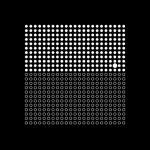
Vital was created to turn an abstract idea—the brevity of life—into an immediate visual experience that encourages reflection and action.
The application represents an 80-year lifespan as a matrix of 4,160 weeks. Users can enter their birth date, significant events, and personal stages to see how much of their life each period has occupied.
I designed a minimalist experience weighing less than 1 MB that transforms the passage of time into a clear tool for perspective, memory, and decision-making.