Decision debt: The hidden cost of slow or unclear decisions
Slow decisions, fast consequences
What is decision debt?
Every delayed or ambiguous decision comes at a cost. Like technical debt in software, decision debt builds silently and grows over time. At first, it’s manageable. You might not even notice. But left unchecked, it becomes a drag on momentum, coordination, and trust. What could have been a small tradeoff becomes a series of detours. Projects get delayed. Priorities get blurred. Teams spend more time discussing what to do than actually doing it.
The danger is in the compounding effect. When one decision is unclear, it creates ambiguity downstream. People begin making assumptions. Execution slows to protect reputations. Leaders hesitate, fearing consequences. And over time, that fear calcifies into organizational inertia. The backlog of deferred or fuzzy decisions becomes a tax on every initiative. And worse, this “decision debt” is often invisible until it’s too late.
Why it compounds over time
In fast-moving companies, velocity is everything. But velocity without clarity becomes chaos. And when decision-making lacks structure, it creates ripple effects. Small judgment calls turn into endless debates. Team members lose confidence in the process. They either wait for answers—or charge ahead with incomplete information, hoping someone else will fix it later.
As new hires come in and teams scale, this lack of clarity metastasizes. Without a common record of decisions or rationale, institutional memory disappears. Each new person rebuilds from scratch. That’s not growth—it’s reinvention. And reinvention is slow.
The root cause: weak data discipline
When data is noisy, action gets delayed
We often assume that decisions stall because of fear, politics, or lack of authority. But more often, the real culprit is the absence of data discipline. When teams don’t trust the numbers—or can’t access them—they hesitate. They fill the gaps with opinions. They default to intuition or seniority instead of facts.
Data discipline is more than analytics. It’s the operational commitment to structure, validate, and share the right information at the right time. It ensures that metrics are not just available but trusted. And it closes the gap between insight and action. In its absence, people waste time debating the source instead of solving the issue.
Chaos without decision architecture
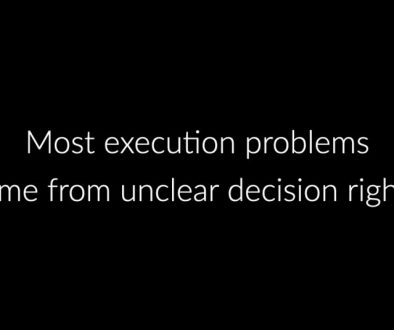
When no one knows who’s supposed to decide, every choice becomes a committee. Escalations multiply. Meetings bloat. Leaders get pulled into every minor fork in the road. And employees lose the autonomy to move quickly.
Good data discipline enables distributed decision-making. It gives people the confidence to act within guardrails. But without it, everyone waits. Or worse—they make conflicting decisions based on different truths. Alignment breaks. Coordination drags.
How to reduce decision debt with data discipline
Create single sources of truth
Build dashboards that unify—not fragment—your metrics. Align on definitions. Eliminate multiple versions of the same number. When teams operate from the same dataset, they spend less time arguing and more time executing.
This applies across departments. Marketing and sales should see the same funnel metrics. Product and support should work off the same retention rates. When every function trusts the data, decisions move faster and friction drops.
Creating a single source of truth is only the beginning. To truly reduce decision debt, teams need systems that not only display data—but turn it into action. That means building tools and rituals that drive real behavior change, not just prettier dashboards. If your metrics don’t inform daily execution, they’re just noise. For a deeper look into how to make operational data truly actionable, see Beyond dashboards: How to turn operational data into action.
Track decisions and their context
It’s not enough to make decisions—you need to remember them. Document the what, the why, and the tradeoffs. Store that context somewhere accessible. This gives future teams clarity, avoids repeated mistakes, and accelerates onboarding.
In cultures with strong data discipline, documentation isn’t bureaucracy—it’s operational memory. It turns reactive work into intentional systems.
Define decision ownership clearly
Not every decision needs consensus. Create clarity around who decides what. Who owns the final call? Who must be consulted? When is escalation necessary? Use frameworks like RACI or DACI only if they’re simple and actually used.
Speed in execution requires speed in ownership. And speed in ownership starts with knowing who’s in charge.
Validate decisions quickly
The best way to fix bad decisions is to catch them early. Build feedback loops into every execution cycle. Use test environments. Measure outcomes fast. Adjust quickly. This allows for bold decision-making without excessive risk.
Data discipline turns learning into a habit—not a crisis response. It makes course correction cheaper, faster, and less political.
What disciplined data cultures look like
Ritualized review, not sporadic insight
Weekly performance reviews. Monthly retrospectives. Quarterly reviews tied to strategy. In high-performing teams, data isn’t a one-time event. It’s part of the rhythm. It frames conversations, not just reports.
Teams align faster when decisions flow from numbers—not hunches. Review meetings become alignment sessions, not interrogation rooms. And that consistency builds clarity across levels.
Transparency by default
Data hoarding is a form of control. And it kills velocity. Share dashboards. Open up models. Trust your people with context. When everyone sees the same numbers, cross-functional teams collaborate better.
Data discipline supports transparency by design. It democratizes decision-making and lowers political friction.
Connection to outcomes
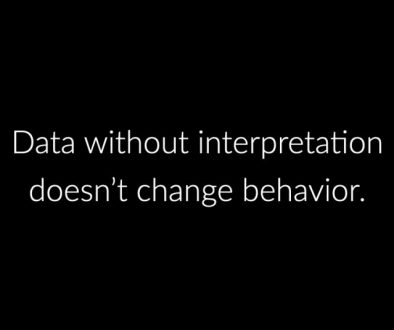
Data isn’t useful unless it connects to behavior. Show how metrics influence prioritization, budgets, hiring. Tie lagging indicators to leading ones. The more visible that connection, the more teams understand the “why” behind the “what.”
For deeper insight into why operational clarity accelerates performance, see Clarity is a performance multiplier. It reinforces the same principle: clarity isn’t fluff—it’s leverage.
Final thoughts
Decision debt doesn’t show up on a balance sheet. But it shows up in every late project, every rework cycle, and every misaligned sprint. It slows momentum, clouds accountability, and quietly erodes your ability to scale. The good news? It’s fixable.
Invest in data discipline. Create systems where the right people have the right context at the right time. Design rituals that elevate data into daily practice. Assign decision ownership with precision. And make documentation a tool for learning, not compliance.
The companies that scale fastest aren’t the ones with the most ideas. They’re the ones with the fewest unanswered questions. And that clarity starts with discipline.